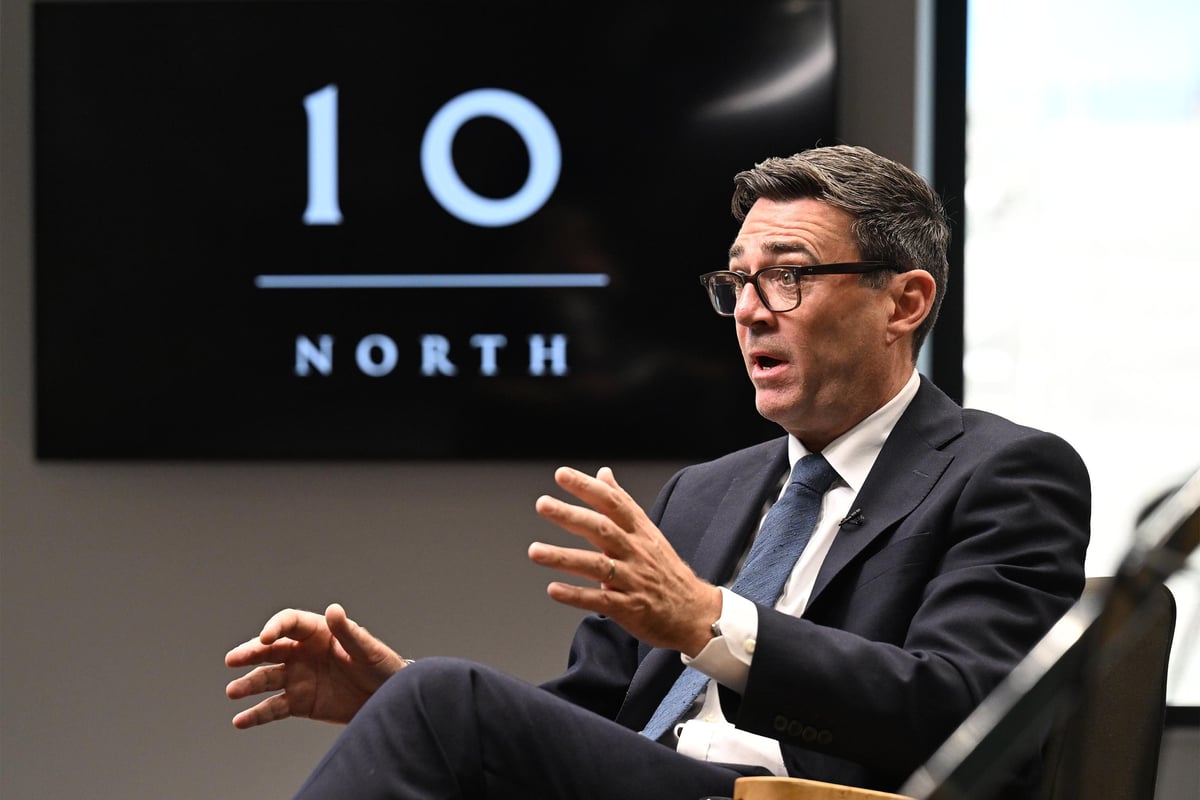
Andy Burnham’s first few weeks: what I’m taking from the early announcements
Whenever a new Prime Minister takes office, one of the first thoughts many business owners have is, “What does this mean for my business?”
It’s an understandable question. Political change naturally creates uncertainty, and it doesn’t take long before people begin trying to work out whether they should be planning differently.
In reality, the first few weeks of a new government rarely bring significant change for most SMEs. What they do offer is an early indication of priorities. That, to me, is often more interesting than the individual announcements themselves.
So far, there have been no major tax changes affecting the majority of business owners. Instead, we’ve seen targeted measures aimed at specific sectors, alongside some notable areas where nothing has changed at all.
Support where the pressure has been greatest
The headline announcement for businesses has been the 20% reduction in business rates for qualifying pubs, social clubs and live music venues across England from next year.
For those businesses, this will be welcome news. Hospitality has faced sustained pressure over recent years, with higher wage costs, rising overheads and changing consumer spending all having an impact. Any reduction infixed costs provides some welcome breathing space.
At the same time, it is difficult to ignore the fact that many othersectors continue to face very similar pressures.
Manufacturers, professional services firms, retailers, construction businesses and many other SMEs are dealing with rising employment costs, inflationary pressures and increasing compliance requirements. For those businesses, there has been little to suggest that broader support is on the way, at least for now.
That doesn’t mean it won’t come. It simply means the Autumn Budget is likely to become a much more significant moment for many business owners.
Looking beyond the announcements
One of the things I find interesting about the early weeks of any new government is how quickly people start looking for certainty.
In practice, there usually isn’t very much. There are announcements, headlines and speculation, but relativelylittle that fundamentally changes how most businesses should be operating fromone week to the next.
That is why I think it is important not to overreact. It is easy to become distracted by what might happen over the coming months. In my experience, businesses generally make better decisions when they focus on what they know today rather than trying to second-guess what may appear in the next Budget.
The bigger picture
Perhaps the most notable aspect of the announcements so far is what hasn't changed.
There have been no significant developments around Corporation Tax, Income Tax, Dividend Tax, Capital Gains Tax, Employers' National Insurance or Making Tax Digital. These remain the areas that will have the greatest influence on how many businesses plan for the future.
What has stood out, however, is the appointment of a dedicated AI Minister. Whilst this won't have an immediate impact on the day-to-day running of most SMEs, I do think it sends an interesting signal about the Government's longer-term priorities.
Artificial intelligence is already changing the way many businesses operate. We're seeing it ourselves, with clients using AI to improve efficiency, streamline administration and support decision-making. Used well, it has enormous potential. Used without proper understanding or oversight, it can also create risks.
The creation of a ministerial role dedicated to AI suggests the Government sees this as more than a passing trend. I suspect we'll see greater focus on innovation, investment and regulation over the coming years. For most businesses, that isn't something that requires action today, but it is another reminder that technology is becoming an increasingly important part of the business landscape.
Overall, the direction of travel appears to be one of targetedintervention and longer-term investment rather than wholesale reform. Whetherthat continues remains to be seen, but I suspect we will have a much clearerpicture once the Autumn Budget is delivered.
A final thought
One thing I have learnt over the years is that political headlines rarely require immediate business decisions.
The businesses that tend to navigate periods of change mostsuccessfully are not those trying to predict every announcement. They are theones with a clear understanding of their own numbers, regular visibility ofcash flow and enough confidence in their financial information to respond whenchange actually arrives.
From what we have seen so far, I don’t think there is any reason for most businesses to change course. What I do think is that this is a good reminder to stay informed, keep plans under regular review and be ready to adapt when the picture becomes clearer over the coming months.
Discover more tax guidance articles.
We hope you find these summaries useful and do let us know if there is a topic you would like further information on – suggestions are always welcome!
Bernard Rogers & Co. to sponsor the Worthies Awards again
Bernard Rogers & Co. is once again the headline sponsor of the Kenilworth Chamber of Trade Worthies Awards, marking the second year running the we have backed the event.The Worthies Awards celebrate the businesses and individuals who make Kenilworth the community it is.
Working From Home Rules Are Changing: What Does It Mean for Small Businesses?
Charity accounting thresholds are changing this September
From 30 September 2026, the financial thresholds that decide how a charity prepares its accounts, and whether those accounts need an independent examination or a full audit, are increasing significantly. For a large number of charities, this means less administrative burden and lower compliance costs.
Contact us for a free, informal chat.
Message us today to explore tailored solutions that meet your unique business needs.